How we work, plainly: Bali Export Broker is the sourcing & export desk of the same Indonesian furniture and home-decor exporter behind baliteakfurniture.com, under Juara Holding Group. We act as your buying agent and earn a disclosed commission or service fee agreed per project — we are not unpaid and not a “free” agent. Furniture, rattan/natural-fiber, recycled teak and home decor we source and export directly; every other category we match via vetted producer partners and say so. SVLK/V-Legal, FSC and similar documents are issued by certified workshops and accredited bodies, not by us. Figures (HS codes, container volumes, lead times) are general references; final scope and pricing are by quote.
Understanding the distinction between pre-shipment inspection (PSI) and container loading supervision (CLS) is critical for buyers importing from Indonesia. While both are quality control measures applied at the final stages of the export process, they serve different, equally vital functions: PSI verifies product quality before shipment, and CLS ensures the goods are correctly and safely loaded into the container.
At Bali Export Broker, our role is to act as your defense against the common pitfalls of international procurement: wrong quality, material defects, and logistical delays at port. This requires precise application of the right inspection at the right time.
What is Pre-Shipment Inspection (PSI)?
Pre-Shipment Inspection (PSI) is a systematic check performed on finished goods before they are packed and loaded for shipment. Its primary purpose is to verify that the manufactured products comply with the buyer’s specifications, purchase order terms, and any applicable international standards. This inspection is typically conducted when at least 80% to 100% of the order quantity is produced and packed, or ready for packing, allowing for a representative sample to be drawn.
The Role of AQL in PSI
PSI commonly employs the Acceptable Quality Limit (AQL) sampling method, based on ISO 2859-1 (or ANSI/ASQ Z1.4). This statistical sampling technique allows inspectors to determine, with a defined confidence level, whether a batch of products meets the specified quality criteria without inspecting every single item. Buyers specify the AQL levels for critical, major, and minor defects, which then dictate the sample size and the maximum number of acceptable defects for that sample. For instance, an AQL 2.5 for major defects means that for a given sample size, if the number of major defects exceeds the pre-defined acceptance number, the entire batch may be rejected.
Key Checkpoints During a PSI
A comprehensive Pre-Shipment Inspection covers several critical areas to provide a holistic view of product quality:
- Quantity Verification: Confirmation that the total quantity produced matches the purchase order.
- Visual Inspection for Quality & Workmanship: Detailed examination of products for aesthetic defects, surface finish, color consistency, and overall craftsmanship. For furniture and home decor sourced from Bali and Jepara, this includes checking for sanding marks, inconsistent staining, glue residue, and proper joinery.
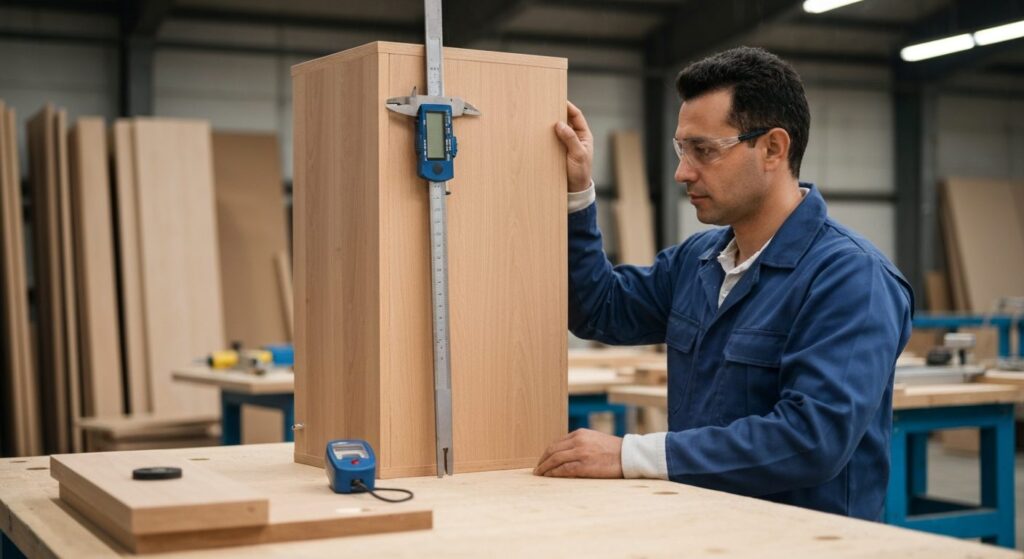
- Product Specifications & Dimensions: Measuring items against approved samples, technical drawings, and specification sheets to ensure accurate dimensions, weight, and material composition. For solid wood furniture, this includes verifying wood species and structural integrity.
- Functionality Check: Testing moving parts, drawers, doors, and other mechanisms to ensure they operate smoothly and correctly. For lighting fixtures, this involves basic electrical checks where applicable and safe.
- Labeling & Markings: Verification of correct product labels, barcodes, shipping marks, and country of origin (e.g., “Made in Indonesia”).
- Packaging Inspection: Assessment of inner and outer packaging for protective quality, compliance with export regulations, and correct markings. This includes ensuring items are adequately protected against transit damage.
- Drop Tests: For certain products, a controlled drop test may be performed on packaged items to simulate handling stress during transit.
- Moisture Content Verification: Crucial for solid wood products. Using a moisture meter, inspectors verify that the wood’s moisture content falls within the acceptable range (typically 8-12% for furniture in temperate climates) to prevent warping, splitting, or cracking during transit and in the destination environment. This is a standard procedure we implement for all solid wood furniture from our vetted Jepara and Bali workshops.
Why PSI is Indispensable
PSI is your primary defense against receiving goods that do not meet your quality standards. It empowers you to address quality issues with the supplier before the goods leave the factory, saving significant costs and time associated with returns, rework, or disposal of defective products at the destination. Without PSI, you risk accepting an entire container of substandard products, leading to financial losses, reputational damage, and logistical nightmares. It ensures that the product you ordered is the product you receive, mitigating the classic failure of “wrong quality.”
What is Container Loading Supervision (CLS)?
Container Loading Supervision (CLS), also known as Container Loading Inspection (CLI) or Container Stuffing Supervision, is an inspection performed during the actual loading of goods into the shipping container at the factory or warehouse. Unlike PSI, which focuses on product quality, CLS concentrates on ensuring the correct quantity of goods is loaded safely and securely into a suitable container, minimizing the risk of damage during transit and verifying proper documentation.
Key Checkpoints During a CLS
A thorough Container Loading Supervision covers the logistical and physical aspects of preparing goods for sea freight:
- Container Condition Check: Inspecting the container’s structural integrity, cleanliness, dryness, and absence of holes, leaks, or odors. A damaged or unclean container can compromise the goods during transit.
- Quantity Verification: Counting cartons or packages against the packing list and purchase order to ensure the correct number of items is loaded. This prevents shortages or over-shipments.
- Product Identification: Verifying that the loaded products match the order by checking carton markings, product codes, and quantity per carton.
- Loading Method & Cargo Securing: Supervising the loading process to ensure goods are stacked efficiently and securely, utilizing dunnage, strapping, and air bags to prevent movement and damage. Proper weight distribution is also assessed.
- ISPM-15 Compliance: Confirming that any wooden packaging materials (pallets, crates) bear the internationally recognized ISPM-15 stamp, indicating they have been treated to prevent the spread of pests. This is a mandatory requirement for international shipments and prevents customs delays or rejection.
- Container Sweat/Moisture Protection: Ensuring appropriate measures are taken to mitigate container sweat, such as the use of desiccants (silica gel packets) or container liners, especially for sensitive products like wooden furniture and textiles shipped from humid climates like Indonesia.
- Final Sealing & Documentation: Witnessing the container being sealed with a unique numbered seal and recording its number, along with taking photographs of the loaded container and seal. Verifying that all necessary export documentation (packing list, commercial invoice, bill of lading details) aligns with the loaded cargo.
Why CLS is Critical for Secure Shipments
CLS is your safeguard against logistical failures. It directly addresses risks such as missing items, goods damaged due to improper loading, or customs issues arising from non-compliance (e.g., ISPM-15). Without CLS, you rely solely on the supplier’s loading practices, which may not always meet international standards or your specific requirements. This can lead to goods arriving damaged, short-shipped, or, critically, a container held at port due to documentation discrepancies or non-compliant packaging, incurring significant demurrage and detention fees.
PSI vs. CLS: Key Differences and When to Use Each
While both inspections are crucial components of a robust quality control strategy, their focus and timing differ significantly. PSI is about product quality; CLS is about loading integrity and quantity.
- Pre-Shipment Inspection (PSI)
- Focus: Product quality, specifications, workmanship, dimensions, materials, labeling, packaging. “Are the goods made correctly?”
- Timing: When 80-100% of goods are produced and packed/ready for packing, before loading.
- Method: AQL statistical sampling (e.g., ISO 2859-1).
- Primary Risk Mitigated: Receiving defective or non-compliant products; “wrong quality.”
- Outcome: Pass/Fail decision for the entire batch, potential for rework or re-inspection.
- Container Loading Supervision (CLS)
- Focus: Quantity, container condition, loading process, cargo securing, ISPM-15, anti-sweat measures, seal integrity. “Are the correct goods loaded safely and completely?”
- Timing: During the actual loading of goods into the shipping container.
- Method: Full count, visual check of container and loading process.
- Primary Risk Mitigated: Short-shipments, transit damage, container sweat damage, customs delays due to packaging non-compliance; “container held at port,” “wood that splits.”
- Outcome: Verification of loading process, photographic evidence, seal number record.
When to Implement PSI, CLS, or Both
For most international imports, especially high-value or fragile goods like furniture, natural fiber products, and home decor from Indonesia, employing both Pre-Shipment Inspection and Container Loading Supervision is the recommended best practice.
-
Always use PSI when:
- Product quality is paramount, and defects would be costly or difficult to remedy post-arrival.
- You are working with a new supplier or a supplier with a history of quality inconsistencies.
- The products are complex, require precise specifications, or are subject to specific safety standards.
- You need confidence that your goods meet the approved sample and specifications before they leave the factory. This is particularly crucial for furniture where finish, construction, and material integrity (like moisture content in solid wood) are non-negotiable.
-
Always use CLS when:
- Product quantity verification is critical, and shortages would disrupt your operations.
- Goods are fragile or susceptible to damage during transit, requiring specific loading techniques.
- You need to ensure ISPM-15 compliance for wooden packaging.
- There’s a risk of container sweat or moisture damage due to the product type or shipping route.
- You need photographic evidence of the loading process and container seal for insurance or claims purposes.
Using both inspections provides a comprehensive quality assurance net, addressing both product integrity and logistical security. PSI ensures the what, and CLS ensures the how and how many of your shipment.
The Bali Export Broker Approach to Quality Control and Compliance
At Bali Export Broker, our role as your accountable buying agent extends beyond mere sourcing. We integrate robust quality control and compliance measures into every stage of your procurement process, directly addressing the risks of wrong quality, wood that splits, and containers held at port.
For furniture, rattan/natural-fiber, recycled teak, and home decor sourced directly from our vetted Bali and Jepara workshops, we implement a multi-layered QC strategy:
- In-Line Production Checks: Regular inspections throughout the manufacturing process, comparing against your approved sample and specifications. This allows us to catch and correct issues early, preventing costly rework at the final stage.
- Pre-Shipment Inspection (PSI): We conduct thorough PSI using AQL standards once production is complete. This includes detailed checks on dimensions, finish, construction, functionality, packaging, and critically, moisture content verification for all solid wood items. Our goal is to ensure your products meet your exact standards before packing.
- Container Loading Supervision (CLS): Our team supervises the entire loading process. We verify quantities against packing lists, inspect container cleanliness and integrity, oversee proper stacking and securing of goods, confirm ISPM-15 compliance for all wooden packaging, and ensure anti-sweat measures are in place. We document the process with photographic evidence and record container seal numbers.
Beyond physical inspections, we manage the entire export documentation and timber legality paperwork. This includes accurate HS codes, Certificate of Origin (COO), and the crucial PEB (Pemberitahuan Ekspor Barang – Export Declaration) for Indonesian customs. For timber products, we route all orders through SVLK/V-Legal certified workshops to ensure full compliance with Indonesia’s timber legality assurance system, providing the necessary V-Legal documents for legal export and import.
For categories beyond furniture, rattan, recycled teak, and home decor – where we partner-match you with vetted producers – our QC and compliance services are applied similarly, ensuring the same rigorous standards. We never claim a factory, certification, award, or commission percentage we cannot substantiate with verifiable proof.
We operate as a paid buying agent, earning a transparent commission or service fee for our expertise and accountability. This fee allows us to maintain our independence in quality assessment and dedicate our resources to protecting your interests, ensuring we are fully aligned with your success. Our value lies in providing meticulous oversight, expert problem-solving, and comprehensive risk mitigation, not in claiming an “unbiased” or “free” service that cannot genuinely exist in complex international trade.
Ensure your next shipment from Indonesia meets expectations and arrives without issue. Plan your trip to discuss your specific sourcing and QC needs. You can also connect with us via WhatsApp for a quicker initial discussion about your project requirements.
Frequently Asked Questions
What is AQL, and how does it apply to PSI?
AQL stands for Acceptable Quality Limit. It is a statistical method (typically ISO 2859-1) used in Pre-Shipment Inspections to determine a sample size from a production batch and the maximum number of acceptable defects within that sample. This allows for an objective pass/fail decision on the entire batch without inspecting every single item, providing a cost-effective and reliable quality assessment.
What happens if goods fail a Pre-Shipment Inspection?
If goods fail a PSI, the supplier is typically required to rework the defective items or the entire batch to meet the specified quality standards. Depending on the agreed terms, a re-inspection may be necessary. Failing PSI provides the buyer leverage to resolve quality issues before shipment, preventing costly problems at the destination. Bali Export Broker facilitates this communication and ensures corrective actions are taken.
Who pays for Pre-Shipment Inspection and Container Loading Supervision?
The cost of PSI and CLS is typically borne by the buyer, as these services are primarily for the buyer’s protection and assurance. As your buying agent, Bali Export Broker includes these services within our transparent commission/service fee, offering a comprehensive solution. This structure ensures that our focus remains squarely on your quality and compliance requirements.
Is ISPM-15 compliance really that important for shipments from Indonesia?
Yes, ISPM-15 compliance is critically important. It is an international phytosanitary measure that requires all solid wood packaging materials (like pallets and crates) used in international trade to be treated (heat treatment or methyl bromide fumigation) and stamped with a certified mark. Non-compliant packaging can lead to immediate rejection of your container at the destination port, causing significant delays, fines, re-export, or destruction of goods, along with substantial demurrage and detention charges. Our CLS always verifies ISPM-15 stamps.
Can Bali Export Broker help with timber legality documentation like SVLK/V-Legal?
Absolutely. As your compliance lead, I ensure that all timber and wood-based products sourced through Bali Export Broker are processed by SVLK/V-Legal certified workshops. We manage the routing and facilitate the necessary V-Legal documentation to ensure your timber imports from Indonesia comply with both Indonesian export regulations and international timber legality requirements, safeguarding your supply chain.
Do you have further questions about ensuring the quality and integrity of your Indonesian imports? Don’t hesitate to reach out to us. We’re available via WhatsApp for immediate inquiries to help you plan your secure procurement strategy.