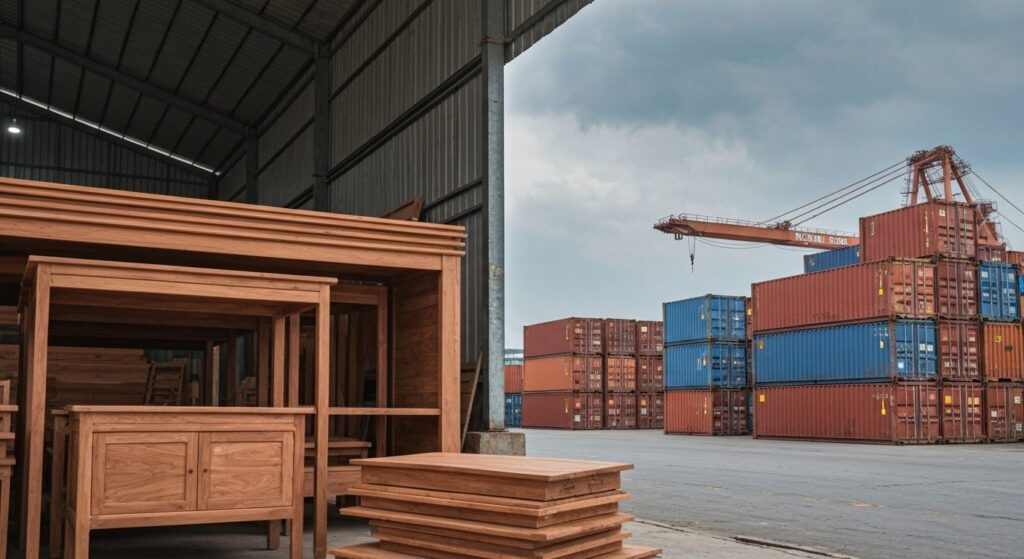
To successfully buy furniture direct from Indonesian manufacturers, a buyer must navigate a complex landscape of production quality, logistics, and regulatory compliance. This process, while offering potential cost efficiencies and customization, requires thorough vetting and precise execution to mitigate common risks.
My role as Quality Control & Compliance Lead at Bali Export Broker is to safeguard your investment by ensuring that every piece of furniture meets your specifications, adheres to international quality standards, and complies with all export regulations. We act as your accountable buying agent, transforming the perceived complexities of dealing direct with Bali workshops and Jepara factories into a structured, transparent, and secure procurement process.
Understanding “Direct” Sourcing in Indonesia
What “Direct” Truly Means
When we discuss how to buy direct from Indonesian factory workshops, the term “direct” implies a procurement channel where the buyer engages with the actual producer, not an intermediary trading house that simply resells. For furniture, rattan, natural fiber products, and recycled teak items originating from Bali and Jepara, Bali Export Broker manages the export directly. This means we are the exporter of record, fully accountable for the goods from the workshop floor to the port of departure. For other categories, we facilitate connections with vetted producer partners, and clearly state that these are commission-matched engagements.
Engaging directly with a manufacturer offers benefits like greater control over product specifications, potential for better pricing by bypassing additional markups, and deeper insight into the production process. However, it also shifts the onus of quality control, compliance, and logistical coordination onto the buyer, or their appointed agent.
The Allure of Direct Purchase
The primary motivation for many businesses to pursue factory direct furniture Indonesia is the perceived cost advantage. By eliminating layers of distribution, buyers aim to secure products at a lower unit cost, enhancing their retail margins or allowing for more competitive pricing in their own markets. Furthermore, direct engagement fosters a closer relationship with the manufacturer, enabling more precise customization, material selection, and design iteration.
This approach is particularly attractive for volume buyers or those seeking unique, custom-designed pieces that differentiate their offerings. The ability to specify exact dimensions, finishes, and material grades directly to the production line ensures that the final product aligns perfectly with brand requirements.
Risks of Direct Sourcing
While the benefits of dealing direct with Bali workshops or Jepara factories are clear, the risks are substantial if not managed effectively. Without an on-ground presence and specific expertise, buyers frequently encounter issues that can erode any perceived cost savings and damage supply chain reliability.
Quality Control & Sample Mismatch
One of the most frequent challenges is maintaining consistent quality from sample approval to full production. Workshops, especially smaller ones, may struggle with process control. Discrepancies can arise in material quality, finishing standards, dimensions, or structural integrity. Without in-line production checks, deviations often only become apparent at the final inspection stage, leading to costly delays and rework.
For solid wood furniture, verifying moisture content is critical. Wood that is not properly kiln-dried to appropriate levels (e.g., 8-12% for indoor use in temperate climates, or 12-16% for outdoor applications, last verified June 2026) will be unstable, prone to splitting, warping, or cracking during transit or once it reaches a different climate. Our process includes regular moisture meter checks throughout the drying and production phases.
Communication Barriers & Misunderstandings
Language differences are a foundational hurdle, but cultural nuances in business communication can be equally problematic. What seems clear in an email or a brief conversation may be interpreted differently on the factory floor. Ambiguous specifications, unstated assumptions, and a reluctance to deliver “bad news” can lead to production errors that are difficult to rectify late in the cycle. This often results in a final product that doesn’t align with expectations, despite good intentions on both sides.
Production Delays & Lead Time Issues
Indonesian manufacturing operates on different timelines than many Western markets. Unforeseen workshop capacity limitations, sudden surges in raw material costs, or unexpected disruptions in the supply chain (e.g., rattan harvesting, teak log availability) can cause significant delays. Without an agent on the ground to monitor progress, enforce schedules, and proactively address bottlenecks, buyers are often left in the dark until a shipment date is missed, impacting their own downstream commitments.
Typical production lead times for custom furniture can range from 8 to 12 weeks, with shipping adding another 3 to 5 weeks depending on destination and chosen freight method. These are estimates, and delays can extend them significantly.
Payment Security & Scams
The internet has made it easier to connect with potential suppliers, but it has also amplified the risk of fraudulent operations. “Fake factories” or unscrupulous intermediaries may present themselves as legitimate manufacturers, often using stolen workshop photos or creating convincing but ultimately misleading online presences. Buyers may make substantial advance payments (typically 30-50% for initial orders) only to receive inferior goods, incomplete orders, or nothing at all. White-labeling, where a reseller claims to be the manufacturer, adds another layer of opacity, often inflating prices without adding value or accountability.
Export Documentation & Legality Compliance
Navigating Indonesian export regulations requires specific expertise. Incorrect Harmonized System (HS) codes can lead to customs delays and fines. Missing or improperly prepared Certificates of Origin (COO) can affect preferential tariff treatments. The Pemberitahuan Ekspor Barang (PEB) – the export declaration – must be accurately filed. For timber products, compliance with the Sistem Verifikasi Legalitas Kayu (SVLK), also known as V-Legal, is mandatory. This verifies that timber is sourced legally and sustainably. Failure in any of these areas can result in containers being held at port, incurring demurrage charges, or even being rejected for export. This risk is amplified for buyers attempting to manage the entire process remotely.
The Role of a Buying Agent: De-risking Direct Procurement
An experienced buying agent like Bali Export Broker serves as the buyer’s critical defense against the inherent risks of international sourcing. We provide a transparent, accountable framework for procuring furniture and home decor from Indonesia.
Supplier Vetting & Matching
Our process begins with rigorous supplier vetting. We maintain a network of proven workshops in Bali for natural fiber products, recycled teak, and smaller decor, and in Jepara for solid wood furniture. This vetting process involves site visits, assessment of production capacity, verification of business licenses, and evaluation of past performance. We match your specific product requirements with workshops that possess the demonstrated capability and quality standards to meet them. For categories outside our direct export scope, we partner with verified producers, clearly disclosing this relationship.
Quality Control & Production Oversight
This is where my team’s expertise is paramount. We implement a multi-stage quality control process:
- Pre-production Sample Approval: Ensuring the prototype aligns with specifications before mass production begins.
- In-line Production Checks: Regular visits to the workshop during production to verify materials, construction methods, and adherence to approved samples. This helps identify and correct issues early, preventing costly rework.
- AQL Pre-Shipment Inspection: A final inspection conducted using Acceptance Quality Limit (AQL) standards (e.g., AQL 2.5/4.0, last verified June 2026) to statistically verify the quality of the finished goods before packing.
- Moisture Content Verification: For solid wood items, we use digital moisture meters to ensure kiln-drying is effective and wood stability meets specified international standards (e.g., 8-12% for indoor use, last verified June 2026).
- Packing Inspection: Confirming that items are packed securely and appropriately for international transit to minimize damage.
Throughout these stages, we provide regular photo and video updates, offering you full visibility into your order’s progress.
Consolidation & Logistics Management
Many buyers source different product types from multiple workshops. We streamline this by offering container consolidation services. We collect goods from various workshops, bring them to our warehouse, meticulously check quantities against packing lists, and then expertly load them into either Full Container Load (FCL) or Less than Container Load (LCL) shipments. This ensures efficient use of container space and minimizes freight costs.
Our logistics team coordinates all aspects of freight forwarding, from booking vessels to managing port procedures. We provide options based on your urgency and budget (e.g., FOB, Ex-Works, CIF, last verified June 2026), ensuring a clear understanding of responsibilities at each stage of the shipping process.
Export Documentation & Compliance Management
Mistakes in documentation can lead to significant delays and costs. We manage the entire export documentation process:
- HS Code Verification: Ensuring accurate Harmonized System codes for proper customs classification.
- Certificate of Origin (COO): Preparing and submitting the necessary documentation for origin verification.
- PEB Filing: Accurately filing the Pemberitahuan Ekspor Barang with Indonesian customs.
- SVLK/V-Legal Certification: For all timber products, we route orders through certified workshops and manage the V-Legal export declaration, guaranteeing timber legality and smooth passage through customs.
This meticulous attention to compliance prevents your container from being held at port, ensuring timely delivery and avoiding unexpected demurrage charges.
Communication & Dispute Resolution
We act as your dedicated liaison, bridging language and cultural gaps. Our team provides clear, concise communication regarding order status, production updates, and any potential issues. Should a dispute arise with a workshop, we leverage our local presence and relationships to mediate effectively, protecting your interests and working towards a swift resolution.
Bali Export Broker’s Approach to Direct Sourcing
At Bali Export Broker, our value proposition is built on accountability, expertise, and transparent service. We understand that businesses seek reliable partnerships, not just transactions.
Our Transparent Service Model
We operate as a paid buying agent, earning a transparent commission or service fee for our expertise and the comprehensive services we provide. This fee is clearly outlined in our service agreement, typically structured as a percentage of the Free On Board (FOB) value of your order (e.g., a range of 5-10% depending on order complexity and volume, last verified June 2026). This model ensures that our interests are aligned with yours: successful, high-quality shipments.
It is important to understand that this fee is how we sustain our operations and fund the expert team, infrastructure, and rigorous QC processes that protect your investment. We prioritize accuracy and client success above all else. No one can pay to change what we publish; if you proceed with our partner they may pay us a referral fee at no extra cost to you.
Our Core Categories & Expertise
Bali Export Broker, part of Juara Holding Group, specializes in sourcing and exporting specific product categories directly from vetted Bali and Jepara workshops. These include:
- Furniture: Indoor and outdoor, across various styles and materials.
- Rattan & Natural Fiber Products: Chairs, lighting, decor, and storage solutions.
- Recycled Teak Furniture: Sustainable and unique pieces.
- Home Decor: A wide range of decorative items, textiles, and accessories.
For these categories, we manage the entire export process directly. For other product categories, we utilize our network of vetted producer partners, offering a commission-matched service. This distinction is always plainly stated, ensuring complete transparency in our operations.
Concrete Steps with Bali Export Broker
Engaging with us for your direct sourcing needs follows a clear, structured path:
- Initial Consultation: We discuss your product requirements, target pricing, volume, and timeline.
- Supplier Identification & Sampling: Based on your needs, we identify suitable workshops and facilitate sample production for your approval.
- Production Management & QC: Once samples are approved, we oversee production, conducting in-line QC checks, moisture content verification, and final AQL inspections.
- Logistics & Documentation: We manage consolidation, container loading, freight booking, and prepare all necessary export documentation, including SVLK/V-Legal for timber.
- Final Shipment: Your order is shipped, and we provide tracking information until it reaches your destination port.
Typical Sourcing Scenarios & How We Assist
Scenario 1: Sourcing a New Product Line
A buyer wishes to introduce a new line of rattan lighting and teak side tables. They have design concepts but no established supplier network in Indonesia. We would:
- Identify reputable workshops in Bali (for rattan) and Jepara (for teak) capable of producing the designs.
- Facilitate prototype development and sample approval.
- Oversee production with regular QC checks, ensuring design fidelity and material quality across both workshops.
- Consolidate the finished goods at our warehouse, prepare all export documentation (including V-Legal for teak), and arrange a single container shipment.
Scenario 2: Scaling Existing Production
An established brand needs to increase their existing order volume for recycled teak dining tables but their current supplier is struggling with capacity or consistent quality. We would:
- Assess the current supplier’s issues and, if necessary, identify alternative or additional vetted Jepara workshops with proven capacity and quality.
- Implement a robust QC plan, including strict moisture content verification and AQL inspections, to ensure consistency across all production batches, potentially from multiple workshops.
- Manage the increased logistical complexity of higher volumes, ensuring timely and compliant shipments.
Scenario 3: Addressing Past Quality Issues
A buyer previously attempted to buy furniture direct from Indonesian manufacturers and experienced issues with splitting wood or inconsistent finishes. They are hesitant to re-engage without professional assistance. We would:
- Review the specific nature of the past quality failures.
- Source new workshops known for their adherence to quality standards and robust kiln-drying processes.
- Implement stringent in-line QC with a particular focus on the problem areas (e.g., moisture content checks at multiple stages for wood, detailed finish inspections).
- Provide detailed QC reports and photographic evidence at each stage to rebuild buyer confidence.
- Direct Sourcing (Buyer Alone)
-
- Supplier Vetting: Limited to online research, potential for “fake factory” scams.
- Quality Control: Remote oversight, relying on factory’s self-reporting, high risk of sample mismatch.
- Communication: Direct language/cultural barriers, potential for misunderstandings.
- Logistics: Buyer responsible for coordinating multiple workshops, consolidation, freight, and customs.
- Documentation: Buyer responsible for HS codes, COO, PEB, SVLK/V-Legal compliance; high risk of port delays.
- Payment Security: Direct payments to unknown entities, higher risk of fraud.
- Accountability: Limited recourse if issues arise; buyer bears full risk.
- Direct Sourcing (With Bali Export Broker)
-
- Supplier Vetting: On-ground verification, established network of vetted workshops, reduced fraud risk.
- Quality Control: Multi-stage, in-line, and pre-shipment AQL inspections, moisture content verification by QC lead, regular updates.
- Communication: Bali Export Broker acts as a local liaison, clear communication, dispute resolution.
- Logistics: Bali Export Broker manages consolidation, warehousing, container loading, and freight forwarding.
- Documentation: Bali Export Broker prepares all export documents, ensures HS codes accuracy, manages SVLK/V-Legal routing, prevents port delays.
- Payment Security: Payments routed through a trusted, accountable entity.
- Accountability: Bali Export Broker is your single point of accountability for quality and compliance.
Our objective is to simplify the complex process of how to buy furniture direct from Indonesian manufacturers, allowing you to focus on your core business while we manage the operational intricacies. Ready to discuss your specific sourcing needs? Plan your trip or reach out via WhatsApp for a direct consultation.
FAQs
What is SVLK/V-Legal, and why is it important?
SVLK (Sistem Verifikasi Legalitas Kayu) or V-Legal is Indonesia’s national timber legality assurance system. It is mandatory for all timber and timber product exports from Indonesia, verifying that the wood was legally sourced and processed. Compliance ensures your shipment passes through customs without issue and demonstrates your commitment to ethical sourcing.
How does Bali Export Broker ensure moisture content for solid wood furniture?
For solid wood items, my team uses calibrated digital moisture meters to check the wood’s moisture content at various stages: upon arrival at the workshop, after kiln-drying, and prior to final assembly and packing. We ensure levels meet international standards appropriate for the product’s intended climate (e.g., 8-12% for indoor furniture, last verified June 2026) to prevent splitting or warping.
Can Bali Export Broker combine orders from different workshops into one container?
Yes, container consolidation is a core service. We collect goods from various vetted workshops across Bali and Jepara, bring them to our central warehouse, verify quantities and quality, and then efficiently load them into a single Full Container Load (FCL) or Less than Container Load (LCL) shipment. This optimizes freight costs and streamlines logistics.
What are the typical lead times for furniture production and shipping from Indonesia?
Production lead times for custom or made-to-order furniture generally range from 8 to 12 weeks, depending on the complexity of the design and the workshop’s current capacity. Shipping time typically adds another 3 to 5 weeks, varying by destination port and chosen shipping method. We provide estimated timelines upfront and keep you updated on progress.
How does Bali Export Broker charge for its services?
We operate on a transparent service fee model, typically a percentage of the Free On Board (FOB) value of your order (e.g., 5-10%, last verified June 2026), which is clearly outlined in our service agreement. This fee covers our comprehensive services, including supplier vetting, multi-stage quality control, logistics coordination, and export documentation management. This ensures our alignment with your success and enables us to provide an accountable, expert service.
De-risk your next procurement. Our expertise in quality control, compliance, and logistics allows you to successfully buy furniture direct from Indonesian manufacturers without the common pitfalls. To begin planning your next order, plan your trip or connect with our team via WhatsApp.